

Weather patterns in the midwest can be hard on your construction equipment. Extreme cold, summer heat, rain, mud, and snow can contribute to rust, corrosion, clogged filters, worn components, and other equipment problems. When equipment isn’t maintained, it can start losing performance sooner and create delays on time-sensitive projects. Maintenance starts long before something breaks, so make sure you’re staying on top of regular inspections and seasonal maintenance throughout the year.
Maintenance requirements can vary by machine, so always follow the inspection procedures and service intervals recommended by the manufacturer. This is especially important when temperatures or jobsite conditions change.
How to Maintain Heavy Equipment in the Midwest
Midwest weather impacts equipment in different ways throughout the year. A seasonal maintenance check can help crews catch problems before changing conditions put more stress on equipment. If you’re a Midwest contractor, consider running a maintenance check like the one below on your heavy equipment.
Seasonal Maintenance Checklist for Midwest Equipment
Spring Checklist
☐ Clear mud and debris from undercarriages and tracks.
☐ Check track tension on tracked equipment. Running tracks too tight can accelerate wear, while loose tracks can increase the risk of detracking.
☐ Inspect pins, bushings, rollers, and other wear points for signs of damage.
☐ Look for rust, corrosion, and moisture around components that may have been exposed to wet conditions.
☐ Check grease points and lubricate components according to the manufacturer’s service recommendations.
Summer Checklist
☐ Check air filters and restriction indicators, where applicable.
☐ Clean cooling systems and remove dust and debris from radiators, oil coolers, and other cooling components.
☐ Watch for changes in operating temperature, especially when equipment is working in high heat or dusty conditions.
☐ Inspect belts, hoses, and connections for signs of wear or damage.
☐ Keep commonly replaced filters and other maintenance supplies available for jobsites with heavy dust exposure.
Fall and Winter Checklist
☐ Check battery condition and terminals before the first hard freeze.
☐ Check hydraulic, engine, and other fluids and make sure they meet the manufacturer’s specifications for the equipment and expected temperatures.
☐ Inspect hoses, belts, and connections for cracks, leaks, or other damage.
☐ Check fuel and fuel filters for water or contamination before cold weather sets in.
☐ Follow the manufacturer’s cold-weather procedures for diesel equipment, including applicable DEF and fuel-system requirements.
☐ Review cold-weather starting and warm-up procedures with operators.
☐ For diesel equipment with a DPF, review the machine’s regeneration requirements and monitor for regeneration or exhaust system warnings.
Related Reading: Preparing your equipment and jobsite for winter takes more than a quick check. See what supplies Midwest contractors should have ready before temperatures drop.
Prevent Big Repairs by Fixing Small Problems
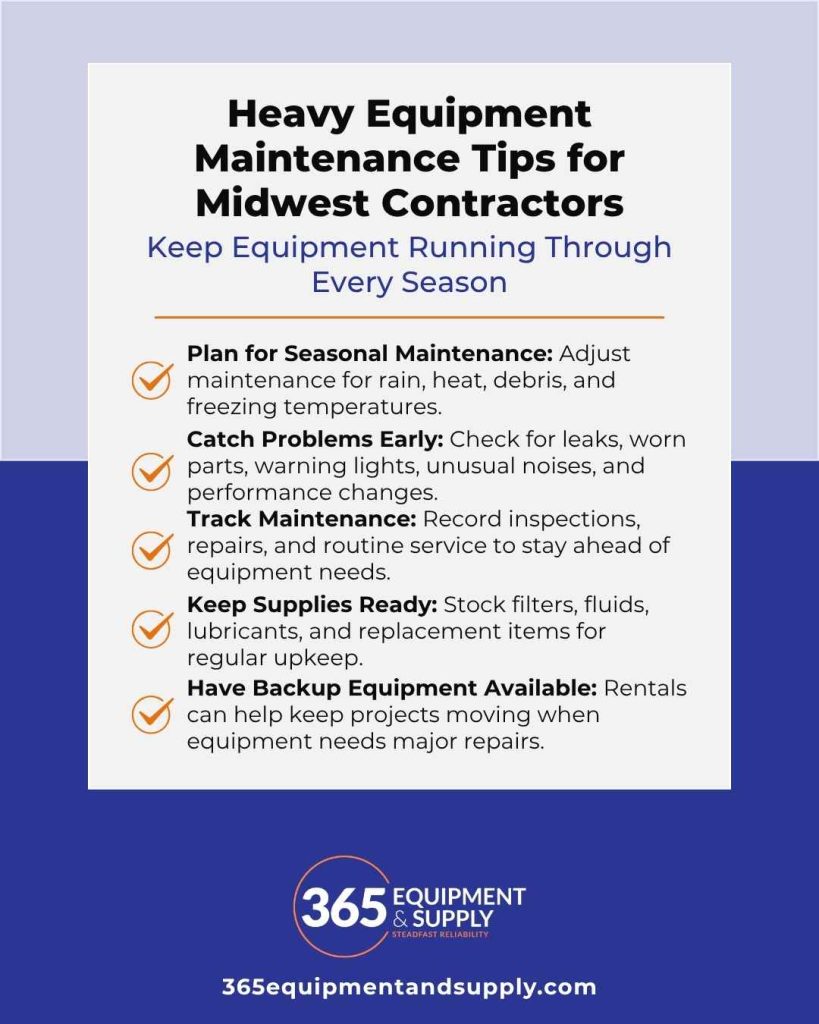
Fix problems early to keep your crew working and avoid downtime on the job. During your inspections, look for fluid leaks, warning lights, unusual noises, or changes in how a machine has been operating. Look over key components for signs of wear or tear; damaged tires, worn tracks, and loose hoses can create bigger problems if they’re left unaddressed. It also helps to keep a record of inspections, repairs, and routine services so your team knows what has already been handled and what needs attention next.
Operators can often catch changes that may not show up during a routine inspection. If a machine starts handling differently, making a new noise, or performing differently than usual, operators can share what they’ve noticed. Don’t ignore the change.
If your equipment has telematics or onboard diagnostic systems, pay attention to service alerts, fault codes, operating temperatures, and other information they provide. Tracking this information over time can help fleet managers spot changes in equipment performance, identify recurring issues, and keep up with service intervals.
Catching these issues early can help you address smaller repairs before they turn into bigger problems. It can also help crews avoid unexpected downtime when equipment is needed for an ongoing project.
Keep Maintenance Supplies and Backup Equipment Ready
Routine maintenance also means having the right supplies on hand. Filters, lubricants, fluids, and other replacement items help you handle regular upkeep before small maintenance needs become larger problems. Keeping basic safety and jobsite supplies available can also make it easier for crews to address issues as they come up.
Rent a Pre-Maintained Fleet when Needed
When a machine needs a major repair, renting replacement equipment can help keep the project on track while the work gets done. 365 Equipment & Supply offers rental equipment that helps keep the job moving. Our fleet includes boom lifts, scissor lifts, telehandlers, and UTVs for projects that require elevated access, material handling, or transportation around larger jobsites. Contractors can also talk with our team about equipment that may not be listed in our current inventory.
365 inspects and maintains its rental equipment, so contractors can stop worrying about the condition of a machine before it gets to the jobsite. Our machines come fully inspected and job-ready, delivered straight to your site.
Planning a future project? Reserve heavy equipment before your next job begins.
Keep Your Equipment Ready for the Work Ahead
Keeping equipment maintained helps you avoid downtime and unexpected repairs. 365 Equipment & Supply can help you stay on track with heavy equipment rentals, jobsite supplies, and the equipment your crews need throughout the year. When the next project calls for more equipment, talk with our team about reserving what you need before work begins.